


Voice-First AI Infrastructure: Democratising Access for India’s Non-Text-Literate Populations

India
Education
Implementing Organisation
Navgurukul Foundation for Social Welfare
India, Haryana, Karnataka, Maharashtra, Himachal Pradesh, Bihar, and Chhattisgarh, Pan-State
Implementing Point of Contact
Abhishek Gupta
CEO
Contributor of the Impact Story
Carnegie India
Year of implementation
2024
Problem statement
400+ million Indians face systemic exclusion from AI-powered learning due to three compounding barriers. First, economic barriers - commercial speech AI costs $5-10/hour, making sustained deployment economically unfeasible for marginalised populations. Second, accessibility barriers - text-intensive interfaces exclude first-generation learners with limited digital literacy. Third, infrastructure barriers - cloud-dependent solutions fail in low-bandwidth, intermittent connectivity environments where target populations live. Existing AI educational tools assume reliable internet, high-end devices, and text fluency. General-purpose chatbots like ChatGPT lack pedagogical scaffolding for effective learning, while commercial EdTech platforms remain cost-prohibitive at scale. Voice-based services used across the development sector cannot be sustainably deployed due to prohibitive costs. This creates a fundamental equity crisis: AI benefits accrue to populations with existing privilege while marginalised communities - who could benefit most from personalised learning -remain excluded. The problem extends beyond education to healthcare consultations, agricultural decision-support, financial services, and government program navigation in rural and underserved areas.
Submission Overview
NavGurukul Foundation for Social Welfare enables underserved youth to move from access to employment by removing financial and digital barriers. Through learner-centered, technology-enabled education and strong industry partnerships, we create inclusive pathways to meaningful careers, dignity, and long-term upward mobility. NavGurukul operates 8 residential campuses across Karnataka, Maharashtra, Himachal Pradesh, Bihar, and Chhattisgarh, serving 1,100+ current residential students. We have trained 1,500+ alumni, 2,000+ engineering students through our Remote Finishing School (Zuvy), and reached 1 million+ school students through digital labs. Our programmes serve multiple underserved communities including marginalised youth, particularly women from rural areas, scheduled castes/tribes, and economically disadvantaged backgrounds. Key impact metrics include a 70% internship success rate with top firms like Amazon, alumni collectively earning $50+ crore annually, and 10,000+ refurbished laptops powering 400+ digital labs. 100% of surveyed graduates reported the programme helped them find jobs, with 92% feeling empowered to make choices about their lives post-programme versus 62% before. Our vision is to create a world where anyone, anywhere who has the will to change their life’s outcomes has the support and opportunities regardless of their birth or background. We achieve this through diverse programmes: residential technology education, Zuvy (affordable AI/ML and web development training), School of Second Chances (vocational training for trauma survivors), and Sama (refurbished laptop distribution).
AI Technology Used
Natural Language Processing, Speech Recognition and Speech-to-Text via Web Speech API, Text-to-Speech via Piper TTS with ONNX Runtime, LLM integration for conversational AI, Computer Vision for OCR and emotion detection
Key Outcomes
Economic Value Creation
Access & Reach
Inclusion & Equity
Efficiency & Productivity
Accuracy & Quality Improvement
User Experience & Satisfaction
Resource Efficiency
Knowledge & Skills Impact
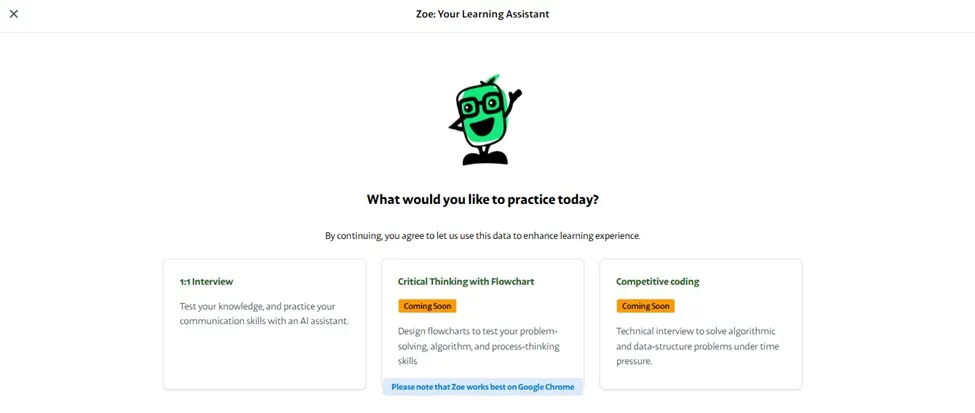
Navgurukul has built voice-first AI infrastructure to create learning and employment opportunities especially for marginalised communities by breaking down cost, connectivity and language barriers. The service reduces costs from $5-10 per hour to $0.20, making deployment at scale economically viable. Students have completed over 1,600 AI-powered interview practice sessions with high completion rates, and self-reported confidence has increased substantially. It can operate in low-resource settings and currently over 400 digital labs have been established with access enabled through 10,000+ refurbished laptops.
Impact Metrics
Total AI-related costs per learner for sustained educational deployment using Navgurukul's AI infrastructure
Baseline Value
Previously, the cost was ₹15,000 per learner Indian Rupees
Post-Implementation
The cost has reduced by 40 percent to ₹9,000 per learner Indian Rupees
Number of AI-powered interview practice sessions completed using Navgurukul's Voice-first AI Infrastructure
Baseline Value
The human mentor capacity tends to be ~100 sessions/month Number of sessions
Post-Implementation
A total of 1,663 completed sessions/month were completed using Navgurukul's AI Infrastructure Number of sessions
Self-reported interview confidence score improvement after AI practice sessions
Baseline Value
The baseline confidence index was 100 Percent
Post-Implementation
The post-training confidence index was 140, marking a 40% increase Percent
Average time taken by students to decompose and solve algorithmic problems using Socratic AI guidance of Navgurukul's AI Infrastructure
Baseline Value
The average problem decomposition time is 45 minutes Minutes
Post-Implementation
The average problem decomposition time reduced to 28 minutes, marking a 38% Minutes
Average continuous engagement time with Navgurukul's AI-powered prompt engineering game, demonstrating sustained user interest
Baseline Value
The average engagement is of 8 minutes Minutes per Session
Post-Implementation
The game resulted in an average engagement of 24 minutes, which is a 3x improvement Minutes per Session
Service availability percentage for Navgurukul's client-side AI processing architecture
Baseline Value
Cloud-dependent systems typically achieve 95-98% uptime, as they are dependent on server availability and network connectivity. Percentage of uptime
Post-Implementation
The client-side AI solution achieved 99.9% uptime, operating independently of network connectivity and limited only by device availability. Percentage of uptime
Number of digital labs established through Navgurukul's refurbished device distribution program
Baseline Value
NA digital labs
Post-Implementation
400 + digital labs were powered by 10,000+ refurbished laptops
End-to-end latency for Navgurukul's voice-to-voice AI interaction enabling natural conversation
Baseline Value
In cloud-based systems, the typical latency tends to be between 2,000 and 3,000 milliseconds (ms) Milliseconds (ms)
Post-Implementation
Navgurukul's solutions recorded a reduced latency of 900 ms Milliseconds (ms)
Cost per hour for real-time speech-to-speech AI interaction using Navgurukul's Voice-First AI Infrastructure
Baseline Value
Prior to the use of Navgurukul's AI solution, the cost per hour for real-time speech-to-speech AI interaction was $5-10 per hour USD per hour
Post-Implementation
The cost has significantly reduced to $0.20 per hour on the client-side processing architecture USD per hour
Implementation Context
Indian states including Karnataka (Bangalore), Maharashtra (Pune), Himachal Pradesh (Dharamsala, Solan), Bihar (Kishanganj), Chhattisgarh (Raigarh, Dantewada, Jashpur), with partnerships in Telangana and Punjab. Pilot deployments have taken place across 22 government schools in Dantewada. There are plans of expansion to 300 schools via a NITI Aayog partnership and state-level integration across 15+ states by 2030.
Current target population size is 5,000 users. By March 2027 the target is to serve 1.1 million users, and 5.5 million by March 2030.
Key Partnerships
NITI Aayog , Telangana Government , Punjab Government , Chhattisgarh Government , Multi-State ITI Partnership , Amazon, Accenture, Macquarie, KPMG, Microsoft, Meta/The Nudge, Institute, Google/AVPN, ACF , HBSF (Harish & Bina Shah Foundation), Affle, Step India Foundation, Samavesh Foundation, District Government of Medchal
Replicability & Adaptation
The client-side speech-to-speech infrastructure is released as open-source npm library (stt-tts-lib) with framework-agnostic design. Successfully deployed across diverse contexts: residential campuses, government schools in low-connectivity areas (Dantewada), urban Zuvy platform users, and validated for cross-sector applications. The plug-and -play architecture enables integration with minimal technical expertise. Key factors enabling high replicability:
- Zero server infrastructure requirements (client-side processing)
- 96% cost reduction makes deployment economically viable
- Open-source codebase publicly available (github.com/navgurukul/stt-tts-lib)
- Framework-agnostic design (React/Next.js with extensibility)
- Validated across low-bandwidth, intermittent connectivity environments
- Support for 10+ Indian languages and regional accents planned
- Modular application suite demonstrates diverse use cases (education, interview prep, assessment, etc.) For Educational Contexts:
- Customise pedagogical applications based on local curriculum requirements
- Adapt language models for regional accents and dialects (transfer learning reduces training costs 60-70%)
- Modify content difficulty levels based on learner demographics
- Integrate with existing Learning Management Systems (demonstrated with Zuvy, Eval platforms) For Low-Resource Settings:
- Prioritise client-side processing to minimise bandwidth requirements
- Use Progressive Web Apps (PWA) for mobile smartphone deployment
- Partner with device redistribution programmes (SAMA model) for hardware access
- Focus on offline-capable applications where internet is intermittent For Cross-Sector Applications:
- Healthcare: Adapt conversational frameworks for patient consultations, symptom checking, health worker training
- Agriculture: Customise for farmer decision-support, crop advisory, market information in local languages
- Financial Inclusion: Modify for voice-based banking, payment systems, credit access
- Government Services: Adapt for programme navigation, grievance redressal, citizen services For Government Integration:
- Ensure DPDP Act 2023 compliance (zero-data transmission architecture inherently compliant)
- Provide plug-and-play integration documentation for government IT teams
- Offer dedicated partner success support for institutional adoption
- Design for existing infrastructure compatibility (works with government-issued devices) Language Localisation:
- Use IISC’s SPICOR and other open-source Indic datasets where available
- Collect 45-50 hours of audio data per new language/dialect
- Apply transfer learning to reduce training costs for similar languages
- Validate accuracy across demographic groups to prevent bias Recommended Modifications:
- Start with single application deployment (AI Interviewer or Socratic Tutor) before full suite
- Pilot in 2-3 locations before geographic expansion to validate local adaptation needs
- Establish feedback loops with target users early (weekly iteration cycles recommended)
- Partner with local organisations with existing beneficiary relationships for faster adoption
- Invest in user training for populations unfamiliar with AI interfaces (2-3 hour orientation sufficient)
* The data presented is self-reported by the respective organisations. Readers should consult the original sources for further details.