


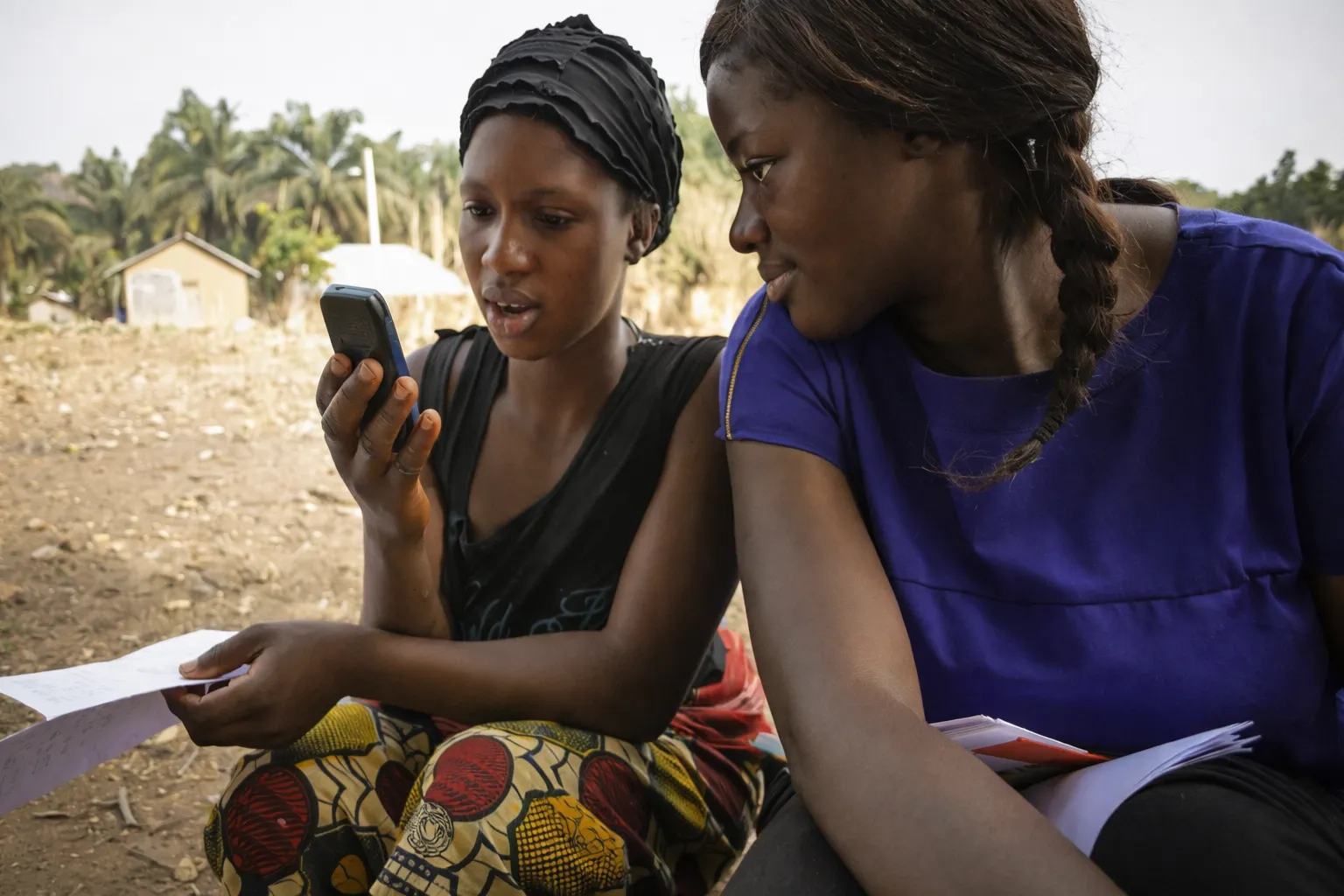
Novissi Togo: ML and Phone Data to Deliver Shock-Responsive Social Protection

Togo
Financial Inclusion
Public Sector
Implementing Organisation
Ministry of Digital Economy and Digital Transformation, Government of Togo
Togo, Pan-Country
Implementing Point of Contact
World Bank Group
Not provided
Contributor of the Impact Story
World Bank Group
Year of implementation
2020
Problem statement
The COVID-19 crisis disrupted livelihoods in Togo, particularly for informal sector workers who lack social protection coverage. Traditional social safety systems were not shock-responsive, lacked dynamic registries, and relied on outdated data and in-person processes, limiting the ability to rapidly identify and serve vulnerable households during the crisis. The Novissin programme in Togo uses artificial intelligence to make social protection shock-responsive. Launched during the COVID-19 crisis, NOVISSI combines administrative data with satellite imagery and data science methods to assess needs and prioritise the most vulnerable informal workers for cash transfers. Machine learning models help determine eligibility and target beneficiaries more effectively in the absence of up-to-date social registries, enabling rapid, phone-enabled registration, assessment, and benefit delivery. This AI-enhanced approach supports scalable, data-driven targeting of social assistance to those most affected by economic shocks.
Submission Overview
The Government of Togo launched the Novissi programme in 2020 as a fully digital social protection initiative in response to the socioeconomic disruption caused by COVID-19. The programme was implemented under the leadership of the Ministry of Digital Economy and Digital Transformation, in partnership with national statistical authorities and international development partners. Novissi was designed to deliver rapid, targeted cash transfers to vulnerable populations affected by lockdown measures. Leveraging Togo’s national voter ID database and mobile money infrastructure, the government deployed machine learning and geospatial poverty targeting techniques to identify eligible beneficiaries, particularly in rural and economically distressed regions. The initiative represents one of the first large-scale applications of AI-driven satellite imagery and poverty mapping for social protection targeting in Sub-Saharan Africa. By integrating mobile money, digital identity systems, and remote sensing analytics, Novissi demonstrated how digital public infrastructure can enable rapid, transparent, and inclusive government-to-person (G2P) transfers.
AI Technology Used
Key Outcomes
Efficiency & Productivity
Economic Value Creation
Access & Reach
Inclusion & Equity
Resource Efficiency
Accuracy & Quality Improvement
Novissi is a fully digital, AI-enabled social protection programme launched by the Government of Togo to deliver rapid cash transfers to vulnerable populations during COVID-19 by combining satellite-based poverty mapping, machine learning targeting, digital ID verification, and mobile money disbursement. In the absence of a national social registry, the system used geospatial analytics to identify the poorest cantons and enabled eligible citizens to self-register via USSD using voter IDs, eliminating in-person processes. Within months, the programme reached over 920,000 beneficiaries nationwide, prioritising informal workers and women, who received higher transfer amounts. By leveraging existing digital public infrastructure, Novissi reduced administrative delays, minimised leakage risks, and enabled transparent, traceable government-to-person payments. The model demonstrated that AI-driven targeting can rapidly expand social protection coverage at national scale in low-income settings, while remaining deployable in resource-constrained environments.
Impact Metrics
Total beneficiaries reached through AI-targeted digital cash transfers
Baseline Value
NA beneficiaries under AI-enabled digital social protection system
Post-Implementation
Over 920,000 individuals received cash transfers Individuals (Number of beneficiaries)
Share of beneficiaries located in the poorest regions identified through machine learning poverty mapping
Baseline Value
No AI-driven geographic targeting system was in place Geographic coverage (Number of cantons targeted)
Post-Implementation
Programme expanded from initial urban targeting to nationwide poverty-ranked cantons using satellite ML models Geographic coverage (Number of cantons targeted)
Proportion of female beneficiaries
Baseline Value
Traditional safety nets did not systematically prioritise women in informal sectors Percentage of total beneficiaries
Post-Implementation
Women received higher transfer amounts and represented a majority share of beneficiaries Percentage of total beneficiaries
Implementation Context
Togo
Informal sector workers, low-income and poor households, rural populations, and women
Key Partnerships
Ministry of Digital Economy & Transformation, Government of Togo, World Bank Group, mobile network operators, and academic and technical collaborators including some referenced researchers
Replicability & Adaptation
- Mobile technology and digital payment infrastructure
- Administrative, geospatial, and mobile operator data sources
- Machine learning
- Technical capacity in terms of development and operationalisation
- Government and partner coordination mechanisms
Supporting Materials

* The data presented is self-reported by the respective organisations. Readers should consult the original sources for further details.