


Digital Developmental Screening: AI Tools for Advancing Inclusive Education from the Early Ages in ASEAN

Malaysia
Education
Implementing Organisation
Toy Eight Holdings Inc.
Malaysia, Sarawak, Selangor, Pan-State
The company is based in Japan and Malaysia and deployed across Singapore and Indonesia
Implementing Point of Contact
Masaki Ishibashi
Co-Founder and CEO
Contributor of the Impact Story
EkStep Foundation
Year of implementation
2024
Problem statement
Across Malaysia and ASEAN, developmental screening typically ends at 18-24 months through vaccination check-ups, leaving children aged 2-6 without routine assessment. Consequently, developmental disabilities including autism, ADHD, and learning disorders often go undetected until primary school which is too late to prevent academic setbacks. A shortage of specialists, expensive private assessments, and limited early intervention services create significant barriers. Urban intervention centres face long waiting lists while rural facilities lack expertise, leaving children from underserved communities without timely support. In 2024, Malaysia's Ministry of Education reported 59,000 Year One students (11.8%) remained unable to read after remedial support, highlighting the cost of late detection. While Malaysia has established strong inclusive education policies, including the Zero Reject Policy and comprehensive health and education frameworks, implementation gaps persist between policy vision and classroom practice. TOY8's AI-powered screening and intervention programme bridges this gap by enabling universal, affordable screening administered by trained teachers, providing immediate digital intervention within mainstream preschools, and empowering educators to support children early without requiring on-site specialists, transforming inclusive education into accessible, scalable practice.
Submission Overview
TOY8 is an organisation that has developed a digital developmental screening tool and an AI-supported intervention programme designed for preschool-aged children, enabling universal screening for all children. The tool is based on international and Japanese screening instruments and was co-developed with Malaysian specialists and universities, specifically University of Malaya and Sunway University. TOY8 works on advancing inclusive education for preschool-aged children (3-5 years old) through its "Inclusive Education 2.0" model, which leverages AI and digital technologies to enable early identification of developmental delays and provide intervention support within mainstream preschools. The organisation collaborates with multiple stakeholders in early childhood care and education (ECCE), including preschools, early childhood intervention providers, healthcare and education specialists, and families.
AI Technology Used
Key Outcomes
Inclusion & Equity
Accuracy & Quality Improvement
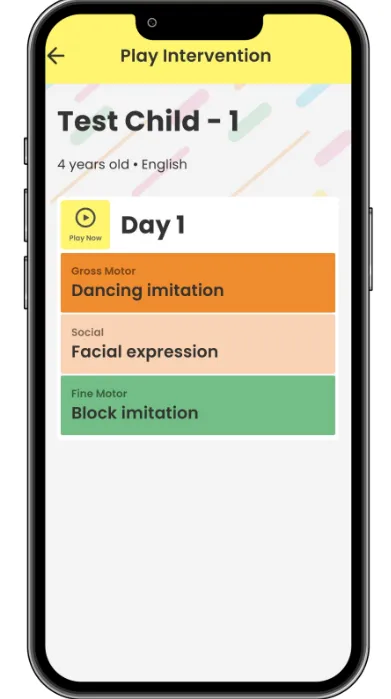
TOY8 has developed an AI-powered digital developmental screening tool and intervention programme designed for preschool-aged children (3-5 years old) to enable universal screening and early identification of developmental delays. The screening tool measures developmental milestones across five domains: gross motor, fine motor, language, cognitive, and personal-social skills through a game-based mobile application featuring a fictional blue cat character called Hachi. Children identified with developmental delays are paired with an AI-driven digital intervention programme supported by professionals and therapists, enabling immediate support while keeping children in inclusive mainstream preschools. A pilot project implementing universal screening and intervention is currently underway with support from the Sarawak government in Malaysia. The digital tool allows re-evaluation every 3-6 months and enables the AI programme to be updated based on the child's progress, creating an individualised early intervention programme that enhances readiness for Year One schooling. The programme empowers preschool teachers with digital tools and access to remote supervision by developmental specialists, allowing them to identify and support children directly within the classroom without requiring on-site specialists.
Impact Metrics
Economic return on investment for AI screening programme
Baseline Value
NA
Post-Implementation
Malaysian Ringgit (RM) 1.85 in economic benefits for every RM 1 invested, with RM 6.87 billion in projected savings through reduced treatment costs and improved independence outcomes
Developmental progress gains for children in intervention programme
Baseline Value
NA
Post-Implementation
Intervention results from 30 children in Sarawak showed an average developmental gain of +8.96 months across cognitive, language, and fine motor domains within a six-month intervention period.
Autism detection rate improvement through AI-based screening
Baseline Value
NA
Post-Implementation
18 times higher autism detection was seen compared to conventional approaches
Teacher confidence in inclusive education practices
Baseline Value
NA
Post-Implementation
96 % of teachers reported increased confidence in inclusive education practices.
Implementation Context
Currently deployed in the states of Sarawak and Selangor in Malaysia, and in Singapore and Indonesia. The use case is intended for broader deployment in the ASEAN region.
Over 10,000 children have been screened using the tool. The target demographic is preschool children aged 3 years 0 months to 5 years 11 months 30 days in Malaysia and across ASEAN, specifically those with developmental delays and disabilities and neurodiverse learners in low-resource settings across emerging economies. Also used by preschool teachers and healthcare professionals.
Key Partnerships
Ministry of Health, Government of Malaysia, Ministry of Education, Government of Malaysia, Sarawak State Government, Selangor State Government, University of Malaya, Sunway University, Economic Research Institute for ASEAN and East Asia (ERIA)
Replicability & Adaptation
* The data presented is self-reported by the respective organisations. Readers should consult the original sources for further details.