


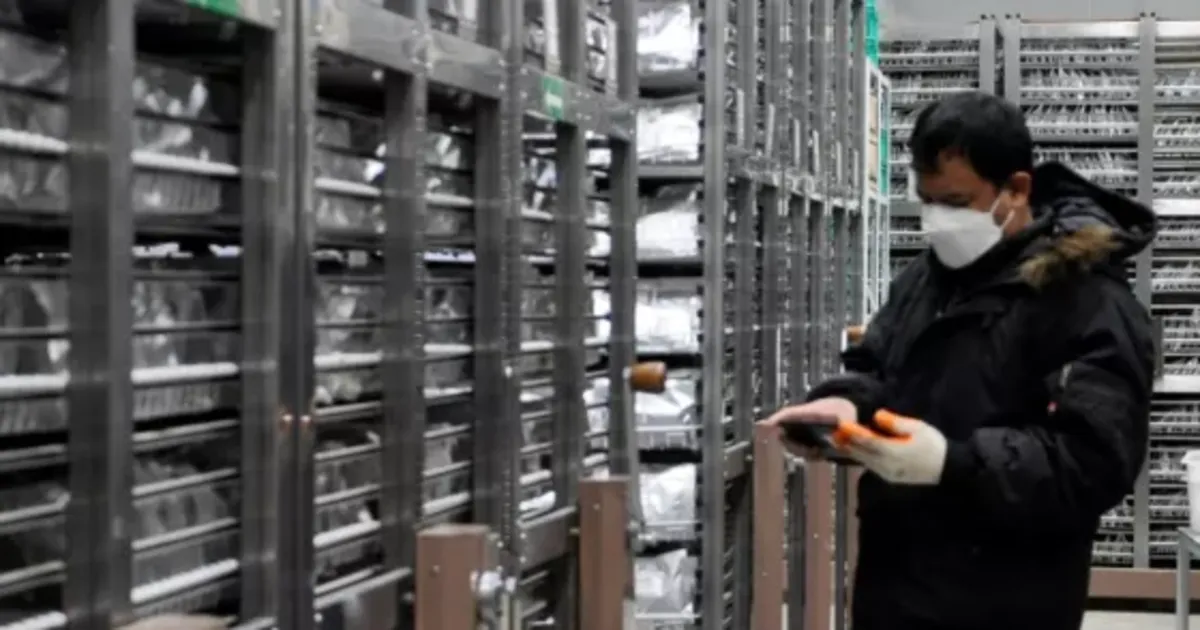
IRRI: AI-Driven Genebank Utilisation for Climate-Resilient Rice Breeding

Philippines
Agriculture
Implementing Organisation
International Rice Research Institute (IRRI)
Philippines, Laguna, Los Baños
While the headquarters is in the Philippines, IRRI has global operations
Implementing Point of Contact
World Bank Group
Not provided
Contributor of the Impact Story
World Bank Group
Year of implementation
2025
Problem statement
Traditional rice breeding and parental selection rely on slow, resource-intensive field trials and expert judgement, limiting the speed at which new high-yielding and climate-resilient rice varieties reach farmers facing climate and market pressures. Breeders must manually sift through decades of fragmented genotypic, phenotypic, and trial performance data to identify promising parents and trait combinations for specific environments, such as drought-prone, flood-affected, or low-input systems. This constrains the effective use of the International Rice Genebank, where over 130,000 accessions are conserved but only a small fraction is routinely used because of limited, hard-to-analyse characterisation data. As climate change intensifies abiotic stresses and demand for low-carbon, resource-efficient production grows, conventional methods cannot keep pace with the need for rapid, targeted hybrid development. There is a critical need for AI-enabled tools that can integrate SNP genotypic data, historical hybrid performance, and market segment information to systematically unlock genebank diversity, prioritise parental lines, and predict optimal hybrid combinations. Such tools would accelerate breeding cycles, reduce costs and trial burden, and support the deployment of climate-smart, high-yielding rice hybrids at scale to strengthen global food security.
Submission Overview
The International Rice Research Institute (IRRI) is a leading global agricultural research organisation and a member of Consultative Group for International Agricultural Research (CGIAR), dedicated to reducing poverty and hunger through rice science and innovation. IRRI works across Asia and Africa to develop climate-resilient, high-yielding, and resource-efficient rice varieties. Its research integrates genomics, breeding, agronomy, and digital innovation to strengthen food systems in low- and middle-income countries. Through partnerships with governments, national agricultural research systems, philanthropic foundations, and technology companies, IRRI advances sustainable rice production while addressing climate adaptation, mitigation, and farmer livelihoods. Recent collaborations include applying artificial intelligence and genomic tools to accelerate hybrid rice breeding, improving precision in parental selection and reducing time-to-market for superior hybrids. IRRI’s work contributes directly to food security, smallholder income stability, and climate-smart agriculture globally.
AI Technology Used
Advanced machine learning models for hybrid performance prediction using SNP genotypic and historical trial data and AI-driven decision support for parental selection and trait targeting.
Key Outcomes
Efficiency & Productivity
Economic Value Creation
Resource Efficiency
Resilience & Risk Reduction
Knowledge & Skills Impact
IRRI is deploying SNP-based machine learning models to transform hybrid rice breeding from a time-intensive, trial-and-error process into a data-driven, predictive system that accelerates the identification of superior F1 combinations. By using genomic prediction (GAI-HRP) to forecast hybrid performance before large-scale field testing, the approach narrows thousands of potential parental crosses to a high-probability shortlist in days or weeks, rather than months, and reduces the conventional 5–6 year cycle required to validate elite hybrids. Early results indicate that AI-recommended combinations can achieve yield potential of up to 130% of baseline hybrids, reflecting optimised hybrid vigor. The system also reduces unnecessary field evaluations, lowers breeding workload and associated costs, and strengthens targeting of climate-resilient, resource-efficient traits. While downstream farmer adoption impacts will materialise over subsequent release cycles, the immediate impact is a measurable increase in breeding precision, speed, and resource efficiency within national and international rice improvement pipelines.
Impact Metrics
Increase in predicted yield potential of AI-selected hybrid combinations
Baseline Value
Yield performance of conventionally shortlisted hybrid combinations Percentage of baseline yield
Post-Implementation
Selected AI-recommended hybrids show yield potential up to ~130% of baseline, which is up to 30% higher yield through optimised hybrid vigor Percentage of baseline yield
Reduction in time required to shortlist promising hybrid parental combinations
Baseline Value
Months required to manually evaluate and shortlist crosses for a breeding season; 5–6 years from crossing to advanced yield validation under conventional workflows Time (Months/Weeks)
Post-Implementation
AI-based parental selection decisions generated in days to weeks; accelerated early-stage hybrid screening Time (Months/Weeks)
Reduction in unnecessary hybrid crosses and field evaluations due to the use of the AI tool
Baseline Value
Thousands of parental combinations typically generated and field-tested to identify elite hybrids Number of crosses avoided / Percent reduction in field trials
Post-Implementation
Significant reduction in number of crosses advanced to field stage due to AI-based pre-selection filtering Number of crosses avoided / Percent reduction in field trials
Implementation Context
Global deployment
Rice farmers in climate-vulnerable regions and smallholder farmers
Key Partnerships
Google.org, the CGIAR Network, and national agricultural research systems
Replicability & Adaptation
- Curated SNP genotypic datasets and multi-environment hybrid performance data
- AI/ML infrastructure and data engineering pipelines
- Breeding programme capacity to integrate AI recommendations into crossing and testing decisions
- Partnerships with genebanks, NARES, and seed companies
Supporting Materials

* The data presented is self-reported by the respective organisations. Readers should consult the original sources for further details.