


Voice AI for Agricultural Advisory in Kenya under the Italy-India-Kenya Trilateral

Kenya
Agriculture
Implementing Organisation
Crane AI Labs
Kenya, Kisumu, Busia, Nakuru, Narok (four hubs)
Implementing Point of Contact
Kato Steven Mubiru
Co-Founder & Chief Executive Officer
Contributor of the Impact Story
Crane AI Labs
Year of implementation
2026
Problem statement
Smallholder farmers reached through agricultural booking agents face four overlapping constraints: mobile coverage is intermittent and can weaken away from towns; prepaid data competes with other household spending; devices are often feature phones or low-end Android handsets; and literacy may be limited in the languages offered by digital interfaces. Extension officers cannot provide individual advice to thousands of farmers on demand. Text-first services leave the literacy barrier unresolved, and internet-dependent services depend on affordable data, suitable devices and usable connectivity. SMS and USSD do not need internet access or a smartphone but still require mobile coverage and airtime. Before this deployment, booking agents handled advisory manually by phone and SMS, and participating hubs had no local-language voice advisory and no hub-level weather advisory in Kiswahili. The pathway combines familiar-language voice interaction with weather advice delivered through existing agricultural relationships, aiming for usable agricultural support within farmers' device, language and spending constraints.
Submission Overview
Crane AI Labs builds offline-first voice and language AI for low-resource African languages, with delivery on low-cost handsets across health, agriculture and education. The organisation operates in Uganda, Kenya and Ethiopia. Offline means inference on the device without a network connection; network-delivered services are described separately. Crane is the implementing and orchestrating partner for the Voice AI Pathway under the UNDP AI Hub for Sustainable Development and the Italy-India-Kenya trilateral. It connects speech models, compute, delivery channels, enterprise partners and evaluation into a working deployment. Crane AI Labs is the first African team in Google DeepMind's Gemma partner programme. Its Gemma work supports familiar-language AI on constrained devices. Its Luganda model work uses CINECA's Leonardo supercomputer through the AI Hub. The Uganda Cultural Context Benchmark (UCCB) is included in the UK AI Security Institute-linked Inspect Evals repository.
AI Technology Used
Key Outcomes
Inclusion & Equity
Efficiency & Productivity
Access & Reach
Knowledge & Skills Impact
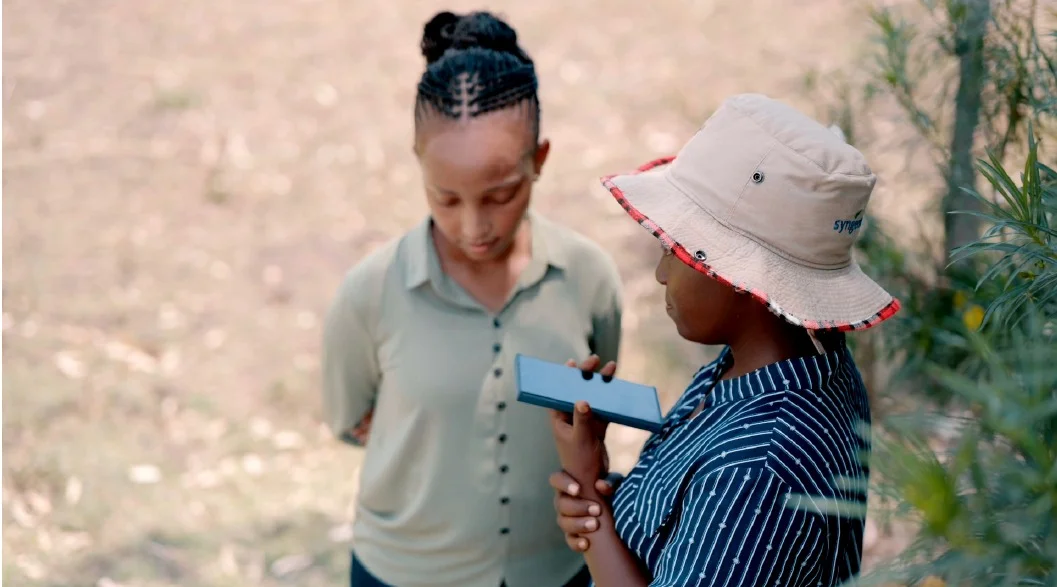
Smallholder farmers in Kenya often face patchy mobile coverage, costly data, basic handsets and interfaces that don't speak their language. This solution brings advice to them through Hello Tractor's agricultural booking agents, whom they already know and trust. Since August 2026, a hub-level weather advisory in Kiswahili has been live across four hubs (Kisumu, Busia, Nakuru and Narok), drawing on 15-day forecasts from Google DeepMind's WeatherNext, with every message reviewed by a person before it is sent. Alongside it, Nia, a voice agent built by MsingiAI on its Sauti speech models, was piloted at the Kisumu and Busia hubs in September 2026, offering advice in Kiswahili, including everyday code-switching. Pairing a frontier forecasting tool with human oversight and existing agent networks offers a replicable template for reaching low-connectivity users.
Impact Metrics
Hub-level weather advisory channel coverage
Baseline Value
No hub-level weather advisory in Kiswahili at participating hubs Hubs
Post-Implementation
Weather advisory channel live across four hubs (Kisumu, Busia, Nakuru, Narok) since August 2026 Hubs
Local-language voice advisory availability
Baseline Value
No local-language voice advisory at participating hubs Number of languages
Post-Implementation
Voice agent Nia piloted (field pilot September 2026) in Kiswahili (including Kenyan conversational usage and code-switching) Number of languages
Weather forecast horizon and spatial resolution
Baseline Value
No hub-level weather advisory in Kiswahili Days (forecast horizon)
Post-Implementation
15-day forecasts (Google DeepMind WeatherNext) at 0.25° (approx. 28 km near the equator); hub-level, not farm-level; uncertainty reported probabilistically Days (forecast horizon)
Kisumu hub capacity
Baseline Value
Not measured Agricultural agents
Post-Implementation
Over 150 agricultural agents at the Kisumu hub Agricultural agents
Implementation Context
Four hubs in Kenya — Kisumu, Busia, Nakuru, Narok
Smallholder farmers reached through agricultural booking agents; rural and low-literacy users with feature phones or low-end Android handsets. Enrolment target: several thousand farmers across the four hubs (a target, not achieved reach). Over 150 agricultural agents at the Kisumu hub (hub capacity, distinct from pathway reach).
Key Partnerships
Crane AI Labs (Private sector) — orchestration; African Voice SDK; offline voice capability; service delivery; WeatherNext integration; pathway documentation. MsingiAI (Private sector) — Sauti speech recognition and text-to-speech for Kenyan conversational Kiswahili and code-switching. Hello Tractor (Private sector) — hubs, booking agents, farmer relationships and agronomic input. Africa Compute Fund (Private sector) — inference hosting in Kenya. UNDP AI Hub for Sustainable Development (International organisation) — convening and programme governance. CINECA (Research infrastructure) — training compute (Leonardo supercomputer) accessed through the AI Hub. EkStep Foundation / COSS (Philanthropic / civil society) — VoicERA voice orchestration capability.
Replicability & Adaptation
Test real devices, coverage, costs and conversational language with intended users. Establish local distribution responsibilities, consent, data custody, withdrawal and escalation. Have local experts review advisory content and forecast limits. Evaluate before expanding.
Coordination experience can transfer; language coverage, agronomy, consent arrangements and distribution relationships require local work. Transferable learning: assess coverage, data affordability, device capability and literacy together; use familiar distribution relationships and accountable human review; plan evaluation and stop rules before launch. Local requirements: actual handset mix, mobile-network reliability, airtime costs and supported languages; farmer trust, booking-agent relationships, agricultural guidance and consent arrangements; locally relevant evidence of affordability, accessibility, safe operation and benefit. Locally registered messaging costs roughly two orders of magnitude less than international gateway delivery, which determined feasibility; the Kenyan cost relationship does not establish prices in another country.
* The data presented is self-reported by the respective organisations. Readers should consult the original sources for further details.